What Successful Amazon Sellers Do Differently?
Table of Contents
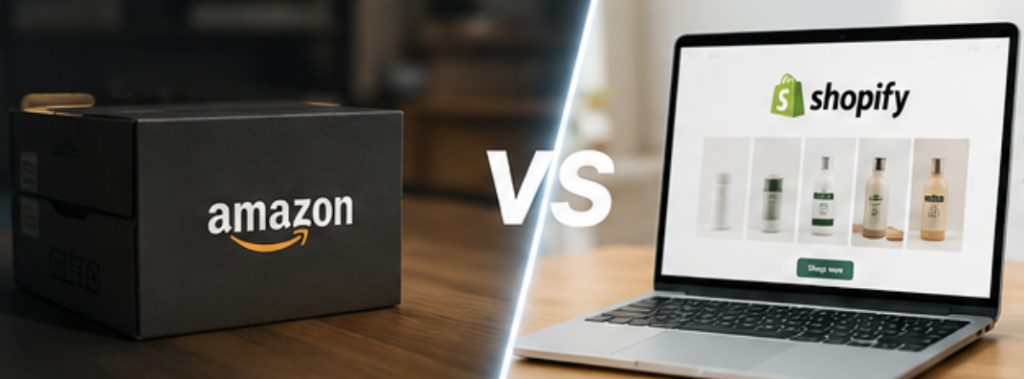
If you’re generating revenue on Amazon but haven’t built a Shopify store yet, you’re leaving money and a brand on the table. That’s not a hot take. It’s something Amazon sellers themselves are saying louder and louder, especially those who’ve already made the move.
At Amazing Days in Sofia, Bulgaria, we sat down with Marcel Marculescu, CEO of IntelliRank, an agency specializing in organic and paid advertising for Amazon sellers. Marcel isn’t just an agency owner advising clients, he’s an active Amazon seller who has built his own Shopify channel. His take on multichannel selling is worth every Amazon seller’s attention. Thats why we asked him the big question: What Successful Amazon Sellers Do Differently?
The Core Problem: Amazon Sellers Are Too Dependent on One Channel
IntelliRank works with Amazon sellers every day. When we asked Marcel what the most common problem sellers come to him with, his answer was immediate: sales.
“Everyone wants sales, everyone wants more revenue, more profitability,” he said. “And usually, if you’re not careful with the ad spend and with the entire managing of the business, that’s bringing you into a tight spot.”
This is the Amazon seller’s dilemma in a nutshell. The platform is powerful, but it’s expensive to grow on. Ad costs keep climbing. Fees eat into margins. And at the end of the day, you don’t own your customer relationships, Amazon does.
The sellers who break out of this trap are the ones who diversify. Specifically, the ones who build a DTC presence on Shopify.
Why Shopify?
Marcel’s answer when asked whether Amazon sellers should invest in Shopify was unambiguous: “100%.”
And he practices what he preaches. “Myself, I have a Shopify channel as well,” he told us. “Like I said, I’m an Amazon seller. It’s even better for me because I’m not paying for ads or anything. The traffic that comes is usually from search engines, so free traffic. Also, the profitability is way better with Shopify because I’m not paying fees.”
For many sellers, the conversation is no longer about choosing one platform over the other, but understanding Shopify vs Amazon – what’s better for your ecom business depending on growth stage, margins and long-term brand goals.
Let’s break down what he’s pointing to:
1. No Marketplace Fees
Amazon’s referral fees typically range from 8% to 15% depending on category, and that’s before FBA fulfillment costs, storage fees and advertising spend. On Shopify, you pay a platform subscription and payment processing — and that’s largely it. For high-volume sellers, this difference in cost structure can be transformational for margins.
2. Organic Traffic = Free Customer Acquisition
On Amazon, ranking organically is increasingly difficult without paid support. PPC is practically mandatory for visibility. On Shopify, a well-executed SEO strategy can drive consistent traffic without ongoing ad spend. Over time, these compounds: content, backlinks and brand searches build an asset that Amazon can never give you.
As competition increases across nearly every category, sellers are paying more attention to strategies like The Amazon Ranking Strategy That Works in 2026 to maintain visibility while controlling advertising costs.
3. You Own the Customer
This is perhaps the most strategically significant advantage. When someone buys from your Shopify store, you get their email address, their purchase history and the ability to market to them directly. On Amazon, that customer belongs to Amazon. Building a DTC channel means building a customer base you actually control.

The Branding Dimension
Marcel made one point that stood out beyond the numbers: “That’s branding. I love branding.”
It’s a short sentence, but it carries significant weight for Amazon sellers who are serious about building a long-term business. On Amazon, you’re selling products. On Shopify, you’re building a brand.
This is also the core debate behind Amazon FBA vs Shopify: Which one builds a real brand?, where the difference between marketplace selling and true brand ownership becomes much clearer.
The distinction matters for several reasons:
- Brand equity is a business asset. A recognized brand commands higher prices, earns repeat purchases, and is far more defensible than a product listing that can be undercut by a competitor or delisted overnight.
- DTC channels tell your brand story. Your Shopify store is yours to design, to write for, to optimize, and to express your brand identity through. No Amazon template constraints.
- Brand-owned traffic has long-term value. As customers search for you by name, Google rewards your domain with higher authority. This compounds over time in ways that Amazon simply cannot replicate.
For health, beauty, supplement and pet wellness brands in particular, categories where trust and brand identity drive purchasing decisions. A strong DTC presence isn’t optional. It’s essential.

The Transition: What Amazon Sellers Need to Get Right
Moving from Amazon to Shopify (or adding Shopify as a channel) isn’t just a technical project. It requires a strategic shift in how you think about your business.
A few things that matter most:
- Product-market fit for DTC. Not every Amazon product translates equally well to a direct channel. Products with repeat purchase potential, a clear brand story, or a customer base that values relationships, supplements, skincare, pet health — tend to perform best.
- SEO from day one. Unlike Amazon, where the algorithm rewards recent sales velocity, Google SEO is a long game. Sellers who invest early in content, technical SEO and link building see results compound over months and years.
- Email and retention infrastructure. Your Shopify store is only as valuable as the customer relationships you build from it. Set up email capture, post-purchase flows and loyalty programs before you start driving serious traffic.
- Brand identity and creativity. Your website is your storefront, your brochure and your brand ambassador. Sellers who invest in strong creative: photography, copy, design; consistently outperform those who treat Shopify as an afterthought.
Building a DTC channel also means investing seriously in retention, because repeat customers often become the biggest driver of long-term profitability. That’s why understanding How to increase customer retention? is essential for brands scaling beyond Amazon.
The Opportunity Is Real: What Successful Amazon Sellers Do Differently?
Marcel put it plainly: “If Amazon sellers are not leveraging [Shopify], they should be tapping into it.”
This is coming from someone who runs an Amazon-focused agency, has sold on Amazon himself, and has built his own Shopify presence. He’s not talking theoretically. He’s talking from experience.
The sellers who will win over the next five years aren’t the ones who maximize their Amazon presence at the expense of everything else. They’re the ones building brands, with Amazon as a powerful acquisition channel and Shopify as the foundation of a business they actually own.
If you’re an Amazon seller wondering whether now is the right time to build your DTC channel, the answer is yes. The question is just how to do it right. So reach out and lets book free consultations!

Your Amazon store needs a partner
We build and grow your Shopify DTC business together with Amazon.
Find out how to own your audience and not depend only on Amazon high fees.

Author: Dusan Popovic

From Amazon to Shopify Check list

Best Amazon FBA course 2026

Connect Shopify to Amazon: Complete 2026 guide