Why More Amazon Sellers Are Expanding to Shopify in 2026
Table of Contents
At the Ecom Mastery Conference in Nashville, one topic kept coming up in conversations with sellers, agencies, and eCommerce professionals: Should Amazon sellers also start selling on Shopify and Why more Amazon sellers are expanding to Shopify in 2026
It’s a question that has become much more relevant over the last year. For a long time, many sellers focused entirely on Amazon because of the platform’s massive traffic, built-in trust and fulfillment infrastructure. But today, the landscape is changing fast.
With the rise of AI-powered search, changing customer behavior and increasing competition on marketplaces, more brands are realizing they need to think beyond a single sales channel.
I recently spoke with Michael Radziszewski, Head of Affiliate Partnerships at SmartScout, during the Ecom Mastery Conference about exactly this topic.
Michael shared some interesting insights into how Amazon sellers can improve their visibility, better understand their competition and why Shopify is becoming more important in the AI era.
Why Sellers Are Thinking Beyond Amazon
Amazon is still one of the best places to launch and scale products. The amount of traffic available on the platform is hard to ignore, and for many sellers, it remains their biggest revenue source.
But relying only on Amazon also comes with limitations.
Sellers don’t fully own the customer relationship. Competition continues to grow in almost every category. Margins are getting tighter. And more importantly, customer discovery is starting to happen outside traditional marketplaces.
Today, buyers are searching for products through AI tools, recommendation engines, social media platforms, Google, YouTube and creator content before they ever land on Amazon.
That means brands need visibility across multiple touchpoints.
This is why omnichannel growth became one of the biggest themes at the conference.
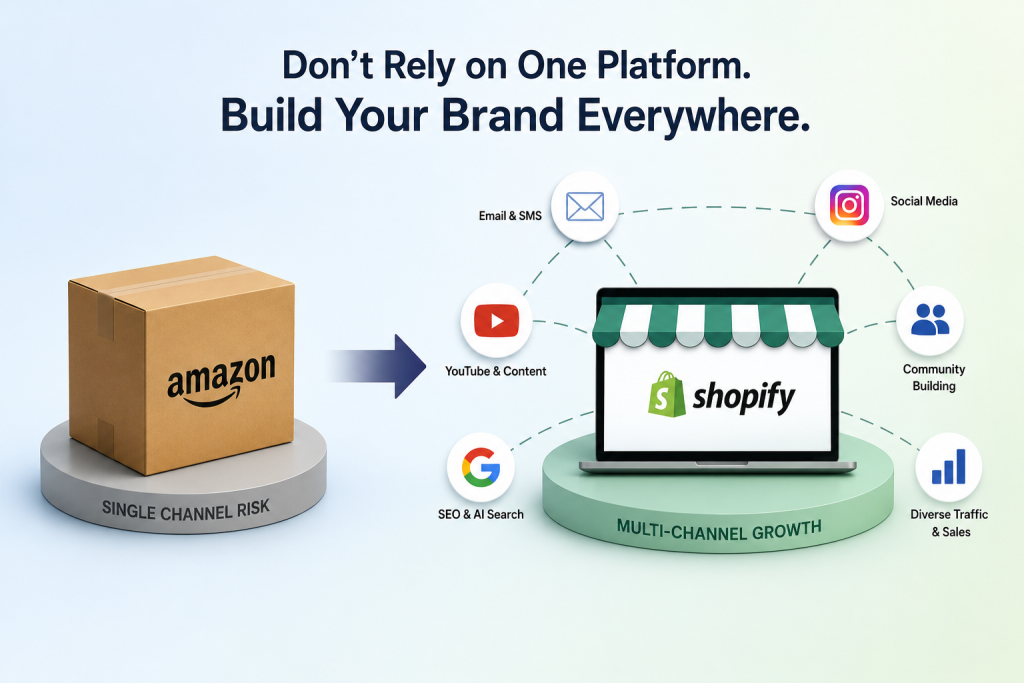
Instead of depending entirely on one platform, sellers are building ecosystems around their brands:
- Amazon for scale and marketplace traffic
- Shopify for brand ownership and customer retention
- Email and SMS for direct communication
- Social media for community building
- YouTube and content marketing for discovery
- AI search visibility for future growth
The brands growing the fastest today are usually the ones diversifying their traffic and sales channels early. This shift is also why more brands are learning How to scale Amazon brand off Amazon instead of relying entirely on marketplace traffic for long-term growth.
The rise of AI search and product discovery
One of the most interesting parts of the conversation with Michael was around AI visibility.
AI-powered search is changing how people discover products online.
Instead of typing simple keywords into Google or Amazon, users are increasingly asking conversational questions through tools powered by large language models.
For example:
- “What’s the best protein powder for runners?”
- “Best standing desk for small apartments?”
- “What skincare brands are good for sensitive skin?”
AI tools are now generating recommendations directly inside search experiences.
That creates a major opportunity for brands that have strong visibility across the web.
According to Michael, Shopify stores may become increasingly important because they allow brands to create additional discoverable content and visibility outside Amazon.
Recently, Shopify has also made moves that appear more friendly toward AI crawlers and indexing.
In simple terms, that means your products and brand content could have more chances to appear in AI-generated answers and recommendation systems.
For sellers thinking long term, this matters a lot.
If all your presence exists only inside Amazon listings, your discoverability can become limited compared to brands that also have:
- A Shopify store
- Blog content
- Product landing pages
- Educational content
- Brand storytelling
- Creator collaborations
- SEO visibility
The future of eCommerce is no longer just about ranking on Amazon.
It’s about being visible everywhere customers search.

Why Shopify Complements Amazon
There’s often a misconception that sellers need to choose between Amazon and Shopify.
In reality, many brands struggle not because Shopify doesn’t work, but because they approach the transition incorrectly. Understanding WHY AMAZON SELLERS FAIL WHEN MOVING TO SHOPIFY can help sellers avoid common mistakes early and build a much stronger omnichannel strategy.
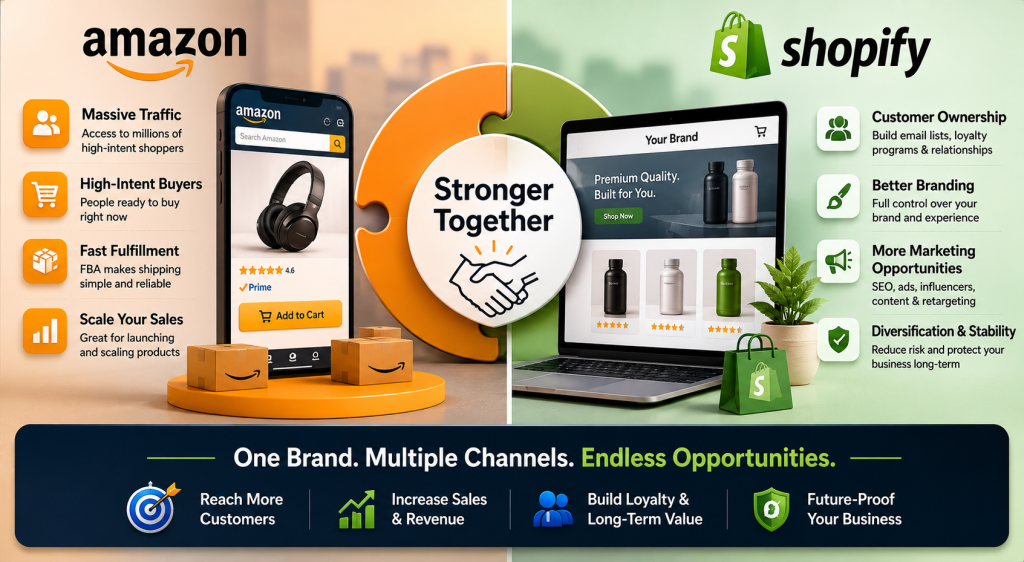
Amazon is excellent for capturing high-intent shoppers who already know what they want to buy.
Shopify, on the other hand, gives brands:
1. Customer Ownership
On Amazon, customer data is limited.
With Shopify, brands can build email lists, SMS audiences, loyalty programs, and long-term relationships.
That means higher lifetime value and better retention.
2. Better Branding
Amazon listings follow a marketplace structure.
Shopify stores allow complete creative control.
Brands can create stronger storytelling, customized experiences, and unique positioning that helps them stand out.
3. More Marketing Opportunities
Shopify opens the door to:
- SEO
- Content marketing
- Influencer campaigns
- Paid media funnels
- Retargeting
- Upsells and bundles
- Subscription models
These are much harder to fully control inside Amazon.
4. Diversification
Relying on one platform always carries risk.
Algorithm updates, policy changes, account issues, or increased fees can heavily impact sellers.
Building additional channels creates stability.
For sellers looking to unify operations across both platforms, learning how to Connect Shopify to Amazon: Complete 2026 guide can simplify inventory management, fulfillment workflows and cross-channel selling.
Data as becoming more important than ever
Another key point from the interview was how important competitive data has become.
SmartScout specializes in helping Amazon sellers understand:
- Revenue estimates
- Market share
- Category performance
- Product trends
- Competitive positioning
- AI visibility
The sellers making smarter decisions today are usually the ones using data to guide expansion.
Instead of guessing whether Shopify is worth it, they analyze:
- Customer acquisition costs
- Retention potential
- Brand search volume
- Cross-channel behavior
- Competitive benchmarks
The more channels you operate in, the more valuable your data becomes.
Should every Amazon seller start a Shopify store?
Not necessarily.
For newer sellers still validating products, Amazon may remain the best initial focus.
But once a seller has:
- Product-market fit
- Consistent sales
- Brand recognition
- Repeat customers
- Stable operations
…it often makes sense to begin building owned channels.
The biggest mistake many sellers make is waiting too long.
By the time competition increases or margins shrink, building an external audience becomes much harder.
Starting earlier allows brands to slowly build:
- SEO authority
- Customer databases
- Content libraries
- Social audiences
- Brand trust outside marketplaces
Over time, this can become one of the company’s biggest competitive advantages.
Future is omnichannel and Why More Amazon Sellers Are Expanding to Shopify in 2026
One thing became very clear at the Ecom Mastery Conference:
The future of eCommerce is omnichannel.
Winning brands are no longer thinking only about Amazon rankings.
They’re thinking about:
- AI visibility
- Search discoverability
- Brand authority
- Customer ownership
- Multi-platform growth
- Long-term retention
Amazon is still incredibly powerful.
Even as brands expand into Shopify and other channels, Amazon ranking still plays a massive role in growth. Many sellers are now combining omnichannel expansion with The Amazon Ranking Strategy That Works in 2026 to maximize both visibility and conversions.
But combining Amazon with Shopify and other acquisition channels creates a much stronger business foundation.
As AI search continues to evolve, brands that already have diversified visibility across the web may gain a significant advantage.
That’s why conversations like this one with Michael are becoming increasingly important for sellers planning for the next few years of eCommerce.
Final thoughts
Selling on Shopify doesn’t mean abandoning Amazon.
For many brands, it means expanding beyond a single ecosystem and preparing for the future of online discovery.
As customer behavior changes and AI-powered search grows, visibility across multiple channels may become one of the biggest competitive advantages in eCommerce.
A huge thanks again to Michael Radziszewski from SmartScout for sharing his perspective during the Ecom Mastery Conference!

Your Amazon store needs a partner
We build and grow your Shopify DTC business together with Amazon.
Find out how to own your audience and not depend only on Amazon high fees.

Author: Dusan Popovic

From Amazon to Shopify Check list

Best Amazon FBA course 2026

Connect Shopify to Amazon: Complete 2026 guide