The Retention System You’re Missing: interview with Marko Mandić
Table of Contents
If you’re scaling a brand that started on Amazon and is now building out on Shopify, paid acquisition probably gets most of the attention and most of the budget, while the retention system you’re missing remains an untapped growth opportunity. Every week brings a new ad platform update, a new targeting feature, a new “secret” that’s supposed to lower your cost per acquisition. Meanwhile, retention often gets treated as an afterthought: a few automated flows set up once and never touched again.
According to Marko Mandić, email marketing and retention strategist at RetentionSide, that’s a mistake brands won’t be able to afford for much longer. In his view, any brand that isn’t seriously investing in retention marketing over the next couple of years will hit a growth ceiling they can’t push past, no matter how good their ads are. Retention is one of the core systems brands need if they want to truly understand How to scale your eCommerce brand beyond short-term acquisition wins.
We sat down with Marko at Amazing Days in Sofia to dig into what separates basic email marketing from a real retention system, the single most expensive mistake brands make with platforms like Klaviyo, how to map a customer journey that actually reflects reality and why zero-party data might be the most underused asset in your entire marketing stack.
Retention Marketing Isn’t Optional Anymore
Here’s the math that often gets skipped: you’ve already spent real money acquiring every single customer on your list: through ads, influencer partnerships, marketplace fees, or all three. Every one of those customers represents a sunk acquisition cost. Retaining them and getting them to buy again costs a fraction of what it took to get them in the door the first time, and it consistently delivers some of the highest returns of any marketing activity available to ecommerce brands.
For brands transitioning from Amazon, this shift is even more significant. Even brands that already understand How to Rank on Amazon in 2026? are realizing that marketplace visibility alone is no longer enough for sustainable growth.
On Amazon, you’re essentially renting access to customers. You don’t own the relationship, you can’t email them directly and you have very limited visibility into who’s buying and why. The moment you move to Shopify, that changes completely. For the first time, you have direct access to your own customer data and a direct line of communication with the people who buy from you.
Not using that access from day one is, in Marko’s words, one of the biggest missed opportunities a brand can have. Every month you operate without a real retention strategy is a month of repeat revenue you’re leaving on the table, which is closely connected to The #1 mistake brands make after a customer buys.
The Most Expensive Mistake: Relying on Templates
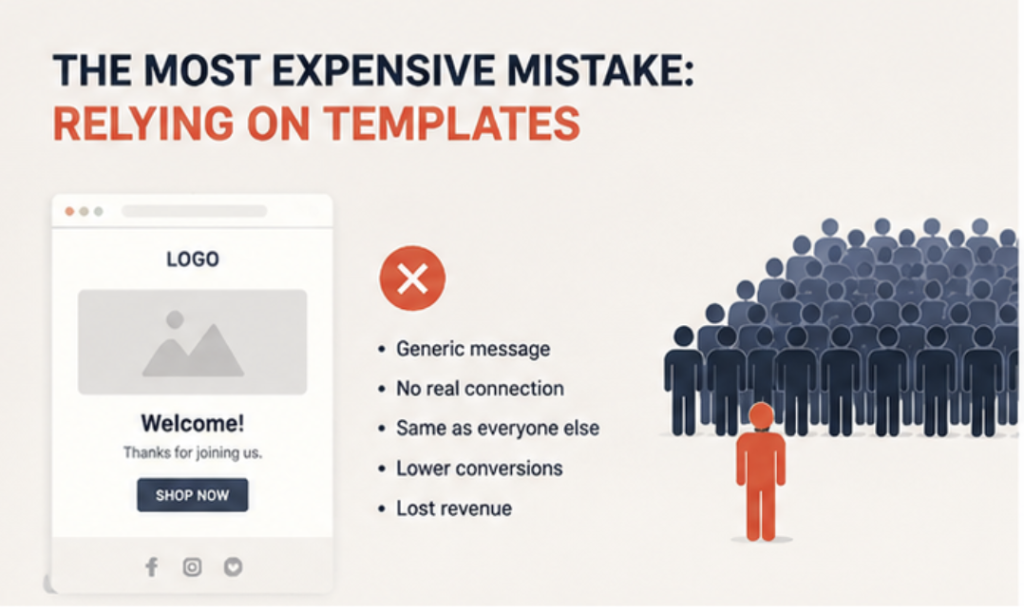
When asked what the single biggest mistake is, Marko didn’t hesitate to point at one specific habit: relying on pre-built flow templates inside platforms like Klaviyo.
The appeal is obvious. Klaviyo (and most other ESPs) ship with a library of “ready to go” flows — welcome series, abandoned cart, post-purchase, win-back, and so on. If you’re not an email marketing specialist, these templates feel like a shortcut. You drop in your logo, swap a few words, adjust the colors to match your brand, and you’ve technically “launched” your email marketing.
The problem is what happens next: nothing changes. Your emails look and read almost identically to every other brand using the same template library — which, at this point, is a huge share of Shopify stores. Customers may not consciously notice this, but the effect is real. A templated email doesn’t address why this specific customer hesitated at this specific step in their journey. It’s generic by design, which means it has no real argument to make.
This isn’t necessarily about deliverability, design quality, or even copywriting skill, those things matter too, but they’re secondary. The core issue is that template flows are built to be universally applicable and something built to apply to everyone rarely convinces anyone. According to Marko, this single habit, defaulting to templates instead of building flows around real customer behavior is likely costing brands more revenue than almost any other mistake in their email program.
Email Marketing vs a Real Retention System
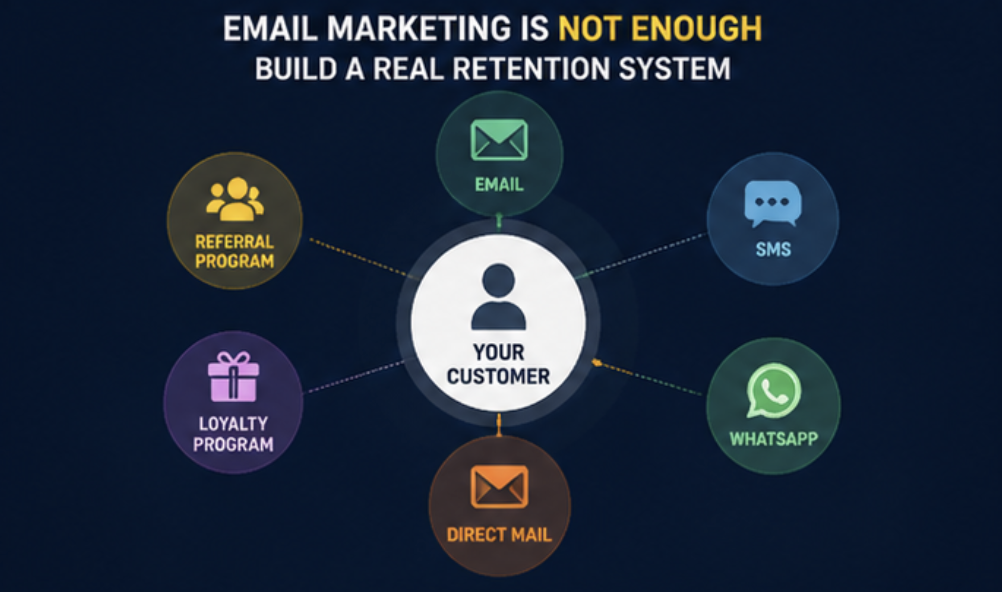
Here’s a distinction worth sitting with for a moment, because it changes how you should think about your entire retention strategy: email marketing is part of retention marketing, but it is not the whole thing.
Think about your own subscriber list for a second. Some percentage of your customers open nearly every email you send, they’re engaged, they trust your brand and your messages reach them reliably. But there’s another segment, often a large one, that has effectively stopped seeing your emails at all. Maybe they’ve got thousands of unread messages sitting in a promotions tab. Maybe their inbox provider has quietly decided your emails aren’t important enough to surface. Either way, email simply can’t reach them anymore, no matter how good your copy is.
This is where a real retention system comes in. Depending on what fits your brand, audience and price point, that system might include SMS, WhatsApp, Viber, direct mail (which has seen a notable resurgence recently), loyalty programs, and referral programs. You don’t need to run all of these simultaneously, but the brands that build true retention systems pick the channels that make sense for their specific audience and weave them together intentionally.
The brands that rely on email alone are, by definition, capping their retention efforts to only the portion of their list that’s still actively engaging with their inbox. Everyone else, often a meaningful chunk of your customer base, is essentially unreachable.
Where to Start: Map the Customer Journey
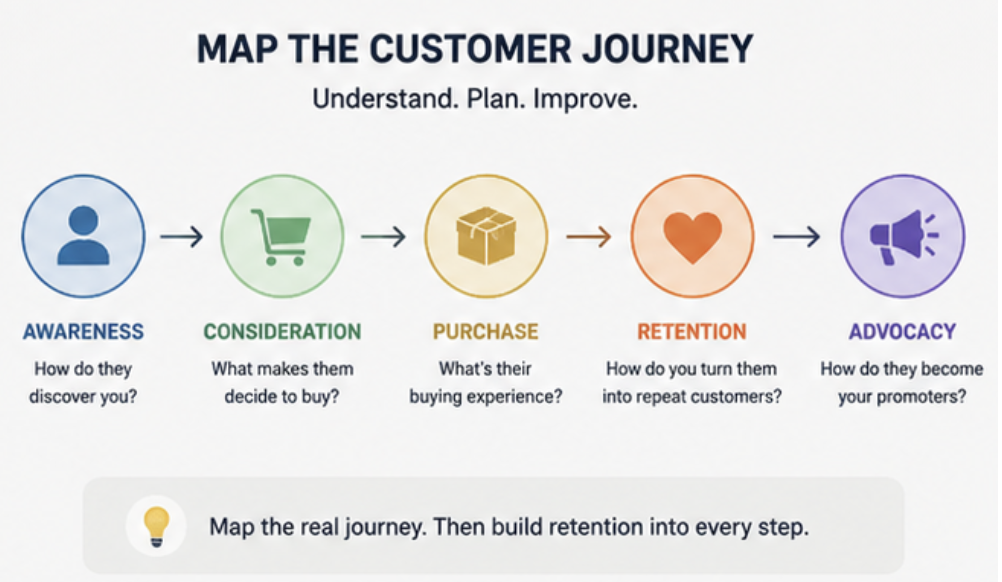
If you’re rebuilding your retention strategy from scratch, or starting one for the first time, the temptation is to jump straight to picking a tool, a platform, or a new flow to set up. Marko’s recommendation is almost the opposite: before touching any software, map out your customer journey and figure out why people are dropping off at each stage.
This sounds simple, but most brands skip it entirely. Concretely, it means asking questions like:
- Someone landed on your homepage: did they go on to browse a collection or product page? If not, why not?
- Someone viewed a product page: did they add it to cart? If not, what stopped them?
- Someone started checkout: did they complete the order? If not, where did they abandon it, and what might have caused that?
- Someone completed an order: did they come back for a second purchase? If not, what would it take to bring them back?
The answers to these questions usually aren’t sitting in your analytics dashboard waiting to be discovered. They’re scattered across customer support conversations, product reviews (both yours and your competitors’), survey responses, and direct customer feedback. It takes real effort to gather and synthesize this information — but it’s the foundation everything else is built on.
Once you understand the actual reason behind a drop-off, maybe shipping costs feel too high at checkout, maybe a product’s price point needs more justification, maybe there’s confusion about sizing or usage; you can build email and retention flows that speak directly to that objection. That’s the real difference between a generic template flow and one built around real customer behavior.
And to be clear: this kind of personalization has nothing to do with inserting a customer’s first name into a subject line. That tactic was novel maybe a decade ago. Today, it’s table stakes at best and often ignored entirely.
Zero-Party Data: The Most Misunderstood Term in Ecommerce Right Now
Zero-party data is one of those terms that’s suddenly everywhere. But according to Marko, almost nobody is actually managing it well, even among brands that talk about it constantly.
Here’s the simplest way to understand it. First-party data is information your platform collects automatically: when someone makes a purchase on Shopify, you get their name, address, phone number, and what they bought. It’s valuable, but it’s passive, it’s a record of what already happened.
Zero-party data is different. It’s information a customer tells you directly, voluntarily, and with consent, typically through a quiz, survey, or form. The customer is choosing to spend time answering your questions, which means the answers tend to be unusually accurate and genuinely useful, if you ask the right ones.
And that’s the catch: asking for a first name or email address isn’t really zero-party data in any meaningful sense, it doesn’t tell you anything that helps you improve your marketing or your product. The value comes from asking questions tied to your customer’s actual goals and pain points.
For a skincare brand, that might mean asking about skin type or specific skin concerns. For a supplements or nutrition brand, it might mean asking whether someone’s primary goal is building muscle, losing weight, improving energy, or something else entirely.
The real value, though, doesn’t come from collecting these answers, it comes from analyzing them. More brands are now using AI-driven segmentation and automation to do this effectively, which is why understanding How to find and use the right AI tools for ecommerce is becoming increasingly important.
Marko gave a great example: imagine 70% of your quiz respondents say their goal is “weight loss.” On the surface, that looks like your dominant audience segment. But when you dig into the data, you might find that only 10–12% of that group actually completes a purchase and their average order value is relatively low. Meanwhile, a smaller segment (say 15–20% of respondents who answered differently) converts at a much higher rate, has a significantly higher average order value and shows much stronger lifetime value.
Over time, these customers often become some of your strongest brand advocates.
That kind of insight doesn’t just improve your email flows. It can reshape your landing page copy and imagery, inform your paid traffic targeting, sharpen your SEO keyword strategy, and influence which products or angles you prioritize across your entire marketing operation. The key, as Marko puts it, is making sure you’re not asking arbitrary questions just because “zero-party data” sounds like something you should be doing, every question should be tied to something that genuinely helps you understand and serve your customer better.
For brands coming from Amazon, where this kind of direct, consent-based customer insight was never accessible, the move to Shopify is the natural moment to start. And the right time to start collecting zero-party data is from day one, not after you’ve already built out your store and flows and are looking for ways to improve them later.
Quick Takes: Plain Text vs. Designed Emails
When asked to weigh in quickly on a few either-or questions, one in particular stood out: plain text emails versus heavily designed emails. Marko’s answer was a genuine fifty-fifty, and the reasoning behind it is worth keeping in mind.
Plain text emails work especially well when there’s a recognizable personal voice behind the brand, think founder-led skincare or supplement lines where the audience already has some familiarity with the person behind the product. In that context, a plain text email reads as a genuine message from someone the customer trusts, and it can perform extremely well. But if that personal connection doesn’t exist, if the email is signed by a generic “customer support” persona the recipient has no relationship with, the same format tends to fall flat.
Designed emails, on the other hand, earn their place when you need space to properly showcase products, highlight specific features, or communicate visually in a way that text alone can’t. Neither format wins outright across the board, the right choice depends on your brand, your audience, and the relationship (or lack thereof) between the two.
What a Stronger Retention Strategy Actually Looks Like
It’s worth stepping back and looking at how all of these pieces fit together, because none of them work particularly well in isolation.
Say you’ve just moved your brand from Amazon to Shopify. You start by mapping your customer journey, not in theory, but by actually talking to your support team, reading through reviews and looking at where people seem to hesitate. You notice that a meaningful share of customers add a product to their cart but never start checkout. Digging deeper, you find that shipping costs aren’t shown until the cart page, and several reviews mention being surprised by the total at checkout.
That single insight changes what your abandoned cart flow should say. Instead of a generic “you left something in your cart!” template, your flow can directly address the shipping concern — maybe by clarifying shipping costs upfront, highlighting a free shipping threshold, or explaining your shipping policy in plain terms. That’s a flow built around a real reason for drop-off, not a guess.
At the same time, you start collecting zero-party data through a short quiz on your site: asking customers about their specific goals or concerns related to your product category. After a few months, you notice that one segment of respondents converts at a much higher rate and has a noticeably higher average order value than the rest. That segment becomes a priority; not just for email segmentation, but for how you write your landing pages, which products you feature, and which keywords you target for SEO.
Meanwhile, you recognize that a portion of your list simply doesn’t engage with email anymore. Rather than continuing to email them into a void, you introduce SMS for time-sensitive promotions and set up a simple referral program to bring in new customers through the people who already love your brand.
None of these pieces are revolutionary on their own. What makes the difference is that they’re connected, each one informs the others and together they form something closer to an actual system rather than a collection of disconnected tactics.
The Retention System You’re Missing: Watch the full interview
If you’re an Amazon seller making the move to Shopify, retention marketing isn’t a “someday” project. It’s a core part of How to scale Amazon brand off Amazon and build a business that isn’t dependent on a single marketplace.
That means moving beyond Klaviyo’s default templates toward flows built around real customer behavior, thinking beyond email to a multi-channel retention system that actually fits your audience, mapping your customer journey to understand where and why people drop off, and starting to collect and act on zero-party data as early as possible.
Brands that treat retention as a core part of their growth strategy (rather than an afterthought bolted on once acquisition costs start climbing) are the ones that build the kind of sustainable, repeat-purchase businesses that can actually scale long after the first wave of paid traffic stops being cheap.
Want to build a Shopify store designed for retention from the ground up? At Byteout, we help Amazon sellers become true brand owners: combining Shopify-certified development with custom solutions tailored to health, beauty, supplements and pet wellness brands. Get in touch with our team to talk about your transition.
🎥 Watch the full conversation with Marko Mandić on the Byteout YouTube channel:

Your Amazon store needs a partner
We build and grow your Shopify DTC business together with Amazon.
Find out how to own your audience and not depend only on Amazon high fees.

Author: Dusan Popovic

From Amazon to Shopify Check list

Best Amazon FBA course 2026

Connect Shopify to Amazon: Complete 2026 guide