GYMSHARK AND SHOPIFY: CASE STUDY
Table of Contents
The rise of Gymshark
When most ecommerce success stories are discussed, they usually revolve around marketplace dominance, aggressive advertising or competing mainly on price. Gymshark followed a completely different path, one that focused on brand building, community, and direct customer relationships from the very beginning.
Founded in 2012 by Ben Francis in a garage in the UK, Gymshark started as a small fitness clothing startup targeting a niche but highly engaged audience: young gym enthusiasts active on social media. Instead of relying on marketplaces for visibility and distribution, the company made a strategic decision early on to sell directly to customers through its own online store.
Francis was passionate about fitness, social media, and product design and he saw an opportunity to create clothing that not only looked good but also spoke to a new generation of gym goers. What set Gymshark apart was its importance on community involvement and social engagement at a time when many established brands were still focused on traditional retail channels.
Within just a few years, Gymshark began generating millions in annual revenues, and by the mid 2010s, the company was selling out major product drops within minutes of launch.
Today, Gymshark is valued at over $1 billion, with a presence in dozens of international markets and millions of customers worldwide. Ben Francis, now widely recognized as one of the most successful young entrepreneurs in ecommerce, has remained closely involved in shaping the brand’s vision and strategy.
Gymshark’s rise is a testament to the power of community driven growth, strategic use of digital platforms and a relentless focus on direct customer relationships. For Amazon sellers considering how to expand beyond marketplaces, this story highlights the potential of building a brand that stands on its own while still leveraging the advantages of multiple sales channels.
From Small Startup to Global Brand
In its early years, Gymshark didn’t have the resources to compete with large sportswear companies on traditional advertising channels. Instead, the brand leveraged digital trends.
The company focused heavily on influencer partnerships long before influencer marketing became mainstream. By collaborating with fitness creators on platforms like YouTube and Instagram, Gymshark built a loyal community rather than simply driving one time purchases.
This community first strategy allowed the brand to scale organically. Customers didn’t just buy products, they identified with the brand’s lifestyle, values and culture.
If you want to create a similar impact, learning how to build and grow a clothing brand online is key. Building a successful clothing ecommerce brand offers practical guidance on turning your apparel business into a recognizable and trusted name.
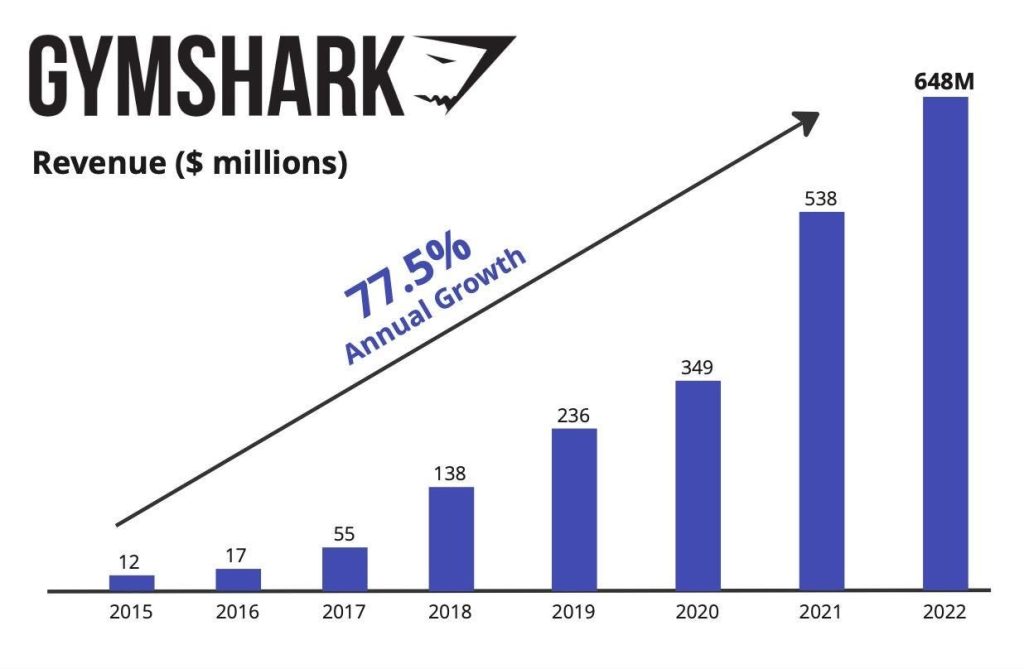
As a result, Gymshark experienced explosive growth, reaching hundreds of millions in annual revenue within less than a decade and eventually becoming one of the most recognizable DTC fitness brands in the world.
Why Gymshark focused on DTC instead of marketplaces
One of the most important strategic choices Gymshark made was prioritizing a DTC model. For many sellers who start on Amazon, making this transition requires a clear strategy, from building brand positioning to developing retention systems and customer ownership. Resources like Amazon to DTC: How to build and scale a DTC brand from scratch help sellers understand the key steps involved in shifting from marketplace dependency to creating a scalable DTC business powered by platforms like Shopify.
Rather than relying on third party marketplaces, the company chose to invest in its own ecommerce infrastructure, powered by Shopify. This allowed Gymshark to maintain full control over the customer journey, from the first brand interaction to post purchase engagement.
This approach provided several critical advantages.
First, Gymshark could build direct relationships with its customers. Instead of losing buyers inside a marketplace ecosystem, the brand collected valuable data that enabled personalized marketing, retention strategies, and long term customer value optimization.
Second, the company retained complete control over brand storytelling. Through its own store, Gymshark was able to create a premium shopping experience, communicate its mission clearly and reinforce a strong brand identity across every touchpoint.
Third, the DTC model allowed the brand to operate with higher margins and reinvest more aggressively into marketing, product innovation, and community development.
Gymshark’s Growth
One of the key factors behind Gymshark’s growth was not only its branding and marketing strategy, but also the decision to invest early in a scalable ecommerce infrastructure. By building its online store on Shopify, the company created a strong foundation that allowed it to handle increasing demand, expand internationally and deliver a consistent customer experience as it grew.
For modern ecommerce businesses, this highlights an important strategic insight. Platforms like Amazon are extremely powerful for reaching customers quickly and generating steady sales, while Shopify serves a complementary role, enabling brands to create a fully owned storefront that supports long term growth and deeper customer relationships.
Gymshark’s success demonstrates how combining marketplace reach with a strong DTC channel can create a balanced and sustainable ecommerce strategy.

Building a Scalable Ecommerce Foundation
As Gymshark’s popularity increased, the brand needed a platform capable of handling large traffic spikes, product launches and global expansion. Shopify provided the reliability and scalability required to support this growth without complex technical overhead.
This allowed the company to focus on core business priorities such as product development, marketing and customer engagement rather than infrastructure challenges.
For ecommerce brands, especially those already selling on Amazon, having a Shopify store creates an additional layer of stability and flexibility, ensuring that growth is not limited to a single sales channel.
Creating a Branded Customer Experience
One of Shopify’s biggest advantages is the ability to fully customize the shopping experience. Unlike marketplace environments where product pages follow standardized formats, a Shopify store gives brands complete control over design, storytelling and user experience.
For Gymshark, this meant creating a premium digital environment aligned with its brand identity. Every element, from visuals and navigation to checkout flow, could be optimized to strengthen brand perception and customer loyalty.
This type of experience plays a crucial role in building long term relationships with customers beyond individual transactions.
Data Driven Growth
By operating its own Shopify store, Gymshark gained direct access to valuable customer insights. This enabled the brand to better understand purchasing behavior, personalize marketing efforts, and implement retention strategies such as email campaigns and loyalty initiatives.
For sellers who already generate consistent sales on Amazon, adding a Shopify store provides an opportunity to complement marketplace revenue with deeper customer engagement and stronger long term brand value.
As Gymshark expanded internationally, Shopify’s ecosystem of integrations made it easier to manage multi currency selling, localized storefronts and global marketing campaigns.
Gymshark’s growth highlights an important lesson for modern ecommerce sellers: successful brands often combine multiple channels rather than relying on a single platform.
The Gymshark website crash
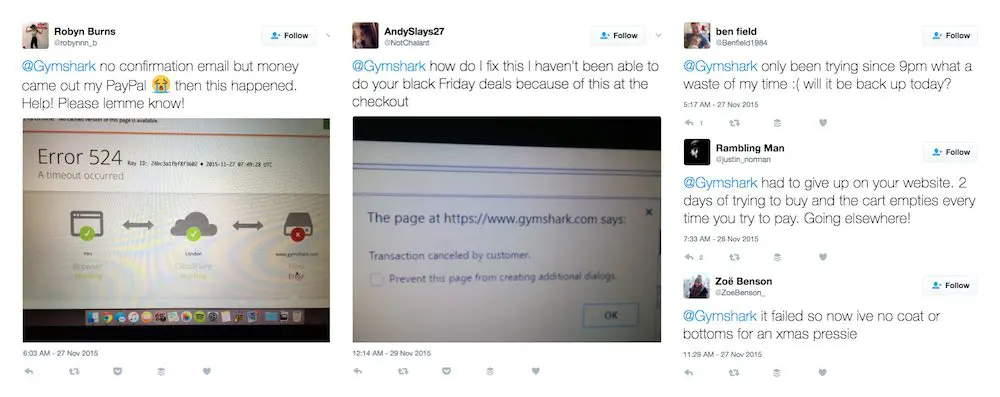
For Gymshark, one of the most defining moments came in 2015. During a major sales event, their website crashed under unprecedented traffic, leaving thousands of eager customers unable to complete their orders.
While the financial loss was significant, the bigger impact was on the customer experience. Fans who had been anticipating new product drops faced delays and frustration. For many growing ecommerce businesses, this kind of technical failure could have caused long term damage to trust and brand reputation.
How Shopify enabled Gymshark’s growth
One of the key factors behind Gymshark’s growth was the way the brand leveraged Shopify to build a reliable and scalable ecommerce foundation. After their website crash in 2015, Gymshark realized they needed an enterprise level solution capable of handling high traffic, global expansion and large scale product launches. Shopify provided exactly that.
Full customer ownership was a major advantage. With their Shopify store, Gymshark could collect emails, run retention campaigns and gain detailed insights into customer behavior. This allowed the team to make informed marketing decisions, personalize interactions and build long term relationships with their audience, something that complements sales from other channels like Amazon.
Selling directly through Shopify also helped Gymshark maintain higher profit margins. Without the fees associated with third party marketplaces, the company could reinvest more into marketing, product development and community building initiatives, fueling further growth.
Complete brand control was another benefit. Shopify allowed Gymshark to fully customize their storefront, product pages, and checkout experience. Every touchpoint could reflect the brand’s identity, creating a cohesive and premium shopping experience for customers worldwide.
Finally, Shopify offered a scalable marketing ecosystem. With access to advanced integrations, automation and analytics, Gymshark could optimize campaigns, track performance in real time, and run global marketing initiatives efficiently. This combination of technology and flexibility made Shopify a critical part of Gymshark’s long term growth strategy.
The incident was a wake up call for Gymshark. It revealed the limitations of their existing ecommerce infrastructure and highlighted the importance of having a platform that could scale reliably, especially during high traffic events like product launches or promotional campaigns.
This moment underscored a critical lesson for Amazon sellers and ecommerce entrepreneurs alike: no matter how strong your brand or product is, technical failures can quickly destroy customer confidence and halt growth. This is especially true during peak shopping events like Black Friday, when sudden traffic surges can overwhelm unprepared stores. Preparing in advance with the right infrastructure and promotional planning is essential, which is why many brands invest time into developing The best Black Friday marketing strategy to ensure their campaigns drive revenue without risking performance issues.
At the time, Gymshark was operating on a more complex ecommerce setup Magento, which often requires heavy customization, dedicated technical teams and constant performance optimization to handle traffic spikes. This complexity can become a major limitation during rapid growth, especially when large product drops generate sudden surges in demand. It’s why many scaling brands eventually start asking Should you switch from Magento to Shopify? Particularly when they need a more reliable, fully hosted platform that can handle high traffic automatically, reduce maintenance overhead, and allow teams to focus on growth rather than infrastructure management, just like Shopify.
This moment underscored a critical lesson for Amazon sellers and ecommerce entrepreneurs alike: no matter how strong your brand or product is, technical failures can quickly erode customer confidence and halt growth. It also set the stage for a shift in Gymshark’s strategy, one that would leverage the power of a scalable, enterprise level ecommerce platform.
What Amazon Sellers Can Learn from Gymshark
Gymshark’s journey from a small startup to a global fitness apparel brand offers several key lessons for Amazon sellers who are considering expanding their business by adding a Shopify store. While Amazon provides an incredible platform for customer acquisition and consistent sales, Gymshark shows that building your own DTC channel can unlock growth, brand control, and long- term profitability.
Building your own store early is one of the most important steps an Amazon seller can take. Gymshark understood that relying solely on a third party marketplace limits the ability to control branding, customer experience and data. By investing in a Shopify store after their website challenges in 2015, they created a scalable platform capable of handling:
- high traffic
- major product launches
- and international demand
Amazon sellers can learn from this by establishing a Shopify store early in their journey, even while continuing to sell on Amazon. However, making the transition successfully requires a different mindset, planning and preparation. Following a structured approach, such as Amazon to Shopify Check list, can help sellers avoid common mistakes and ensure they build a strong foundation before investing heavily in execution.This ensures that growth is not confined to a single channel and provides a foundation for building a brand that can scale over time.
Using Amazon as a traffic channel is another critical strategy. Amazon can serve as a powerful source of new buyers, which can then be guided to your Shopify store through promotions, inserts, or email collection strategies. This approach allows sellers to benefit from the visibility and trust Amazon provides, while simultaneously cultivating direct relationships with customers who return for repeat purchases.
Finally, focusing on customer lifetime value is essential for sustainable growth. Gymshark leveraged the data and insights from their Shopify store to implement retention strategies, personalized marketing campaigns and community building efforts.
Amazon sellers can apply the same principles: by capturing emails, tracking behavior, and creating loyalty programs on their own store, they can increase repeat purchases, improve customer engagement, and maximize long term revenue. While Amazon provides immediate sales, a Shopify store allows sellers to transform one time buyers into repeat customers, turning individual transactions into valuable long term relationships.
In summary, Amazon sellers can learn from Gymshark that marketplaces and DTC stores are not mutually exclusive. By building your own store early, using Amazon strategically for traffic, and focusing on customer lifetime value, sellers can create a balanced, scalable business that combines the advantages of both platforms while strengthening their brand and profitability.

How Amazon sellers can combine Shopify with Amazon for growth
Gymshark’s story shows the power of building a strong DTC presence through Shopify. By investing early in Shopify, Gymshark created a scalable, reliable and fully controlled ecommerce platform that could handle high traffic, global expansion and major product launches. Their success demonstrates how owning your own store allows a brand to control the customer experience, build loyalty, and maximize lifetime value.
For Amazon sellers, Gymshark’s example is inspiring, but it also highlights an important lesson: relying entirely on a single sales channel, even a powerful one like Shopify, carries risks. Traffic fluctuations, technical issues, or changes in consumer behavior can impact revenue if a brand depends solely on its own store.
That’s why combining a Shopify store with marketplaces like Amazon is often the most balanced approach. Many successful ecommerce brands follow this dual channel strategy to reduce risk while maximizing both acquisition and customer ownership. Examples of this approach can be seen in Combining Amazon with Shopify: The Better & Better story, which shows how brands can use marketplaces for traffic while building a strong direct-to-consumer presence through Shopify. Marketplaces provide immediate access to large audiences and help drive new customers, while Shopify offers ownership, customization and tools to nurture long term relationships.
Building your Shopify store early allows Amazon sellers to start collecting emails, optimizing retention strategies and creating a branded experience, while continuing to benefit from the reach and reliability of Amazon. By integrating both channels strategically, sellers can direct traffic from Amazon to their Shopify store, capture customer information, and offer personalized promotions or loyalty incentives, all without sacrificing marketplace sales.
This dual approach reduces dependence on a single platform and strengthens overall business resilience. Shopify provides control, flexibility and scalability, whereas Amazon accelerates acquisition and maintains steady revenue. Together, they form a complementary that supports both immediate sales and sustainable brand growth.
In short, Amazon sellers can learn from Gymshark that while a strong Shopify presence is essential for long term growth, combining it with marketplaces is the safest and most effective way to scale a business, protect against risk and maximize both revenue and customer lifetime value.
Gymshark’s journey shows that long term ecommerce success comes from owning your customer relationships, building a strong brand and choosing the right technology foundation. If you’re ready to move beyond marketplaces and scale your own DTC growth, let’s talk to see how we can help you build, migrate and optimize your Shopify store for sustainable success.


Your Amazon store needs a partner
We build and grow your Shopify DTC business together with Amazon.
Find out how to own your audience and not depend only on Amazon high fees.

Author: Dusan Popovic

From Amazon to Shopify Check list

Best Amazon FBA course 2026

Connect Shopify to Amazon: Complete 2026 guide