Why Amazon sellers struggle with branding?
If you’re an Amazon seller thinking about expanding your business, chances are you’ve already noticed something: your product sells, but your brand doesn’t quite exist yet. You have a logo, maybe a color scheme, but no real story, nothing that makes a customer choose you over the next seller with a similar product. So the question is Why Amazon sellers struggle with branding?
Table of Contents
This is one of the most common challenges we see at Byteout when working with Amazon sellers transitioning to Shopify and DTC channels. And according to packaging, branding and marketing strategy expert Kitty Lai, it’s a problem that’s more fixable than most sellers realize.

Why Amazon sellers struggle with branding? The real problem is usually not a rebrand
When Amazon sellers first approach branding consultants or agencies, many assume they need a full rebrand, a new name, new logo, new everything. But Kitty Lai pushes back on this.
Most sellers don’t need a rebrand. They need a brand refresh.
The foundation is often already there. What’s missing is structure. Specifically, the absence of brand guidelines: a documented framework that defines who your target audience is, what your brand’s core message is, what tone of voice you use and how you visually represent yourself across different channels.
Without this, sellers end up with something far more damaging than a bad logo: inconsistency.
Your Amazon listing says one thing, your packaging says another, and your Instagram profile feels like it belongs to a completely different company. Customers notice this, even if they can’t articulate it. It wears down trust and it makes differentiation nearly impossible.

Two core challenges Amazon sellers face
Kitty highlights two challenges that come up again and again:
1. Inconsistent branding and messaging
When there are no brand guidelines in place, every touchpoint becomes a guessing game. Product titles, bullet points, A+ content, storefront copy, social media: each one is created in isolation, often by different people or at different times. The result is a fragmented brand experience that confuses potential customers and weakens your market positioning.
2. Low-quality listings that don’t tell a story
Amazon sellers are product-focused by nature. That’s how the platform works, you optimize for search, you win the Buy Box, you manage reviews. But this product-first mindset creates a blind spot: the inability to communicate why your brand exists and who it’s for.
Low-quality listings, poor images, generic copy, no emotional connection: fail to add value beyond the product specs. They don’t engage customers. They don’t build loyalty. And they leave you competing on price, which is a race no seller can win long-term.
Should Amazon sellers expand to Shopify?
Kitty Lai’s answer is clear: yes, you should sell everywhere.
A multi-channel approach isn’t just a nice-to-have. It’s how you build a real business with long-term resilience. Relying solely on Amazon means your revenue, your customer relationships, and your brand visibility are all controlled by a third-party platform. One algorithm change, one policy update, one suspended listing — and your business is vulnerable.
Shopify gives you something Amazon never will: a direct relationship with your customer. You own the storefront. You control the experience. You can craft a brand narrative, design a customer journey, and collect first-party data, all things that are critical for scaling a DTC brand. This transition is at the core of Amazon DTC: How to own the customer experience, where the focus shifts from simply selling products to building long-term customer relationships and brand loyalty.
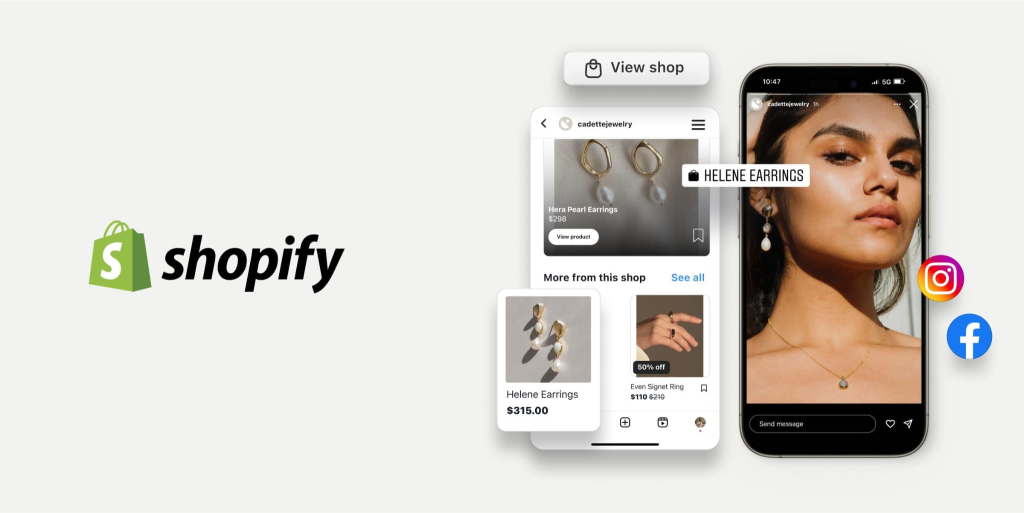
But the real power comes from connecting these channels. When your Shopify store is linked with your social media presence, particularly Instagram, you create an integrated ecosystem where your brand story lives consistently across every touchpoint. Traffic from Instagram lands on a branded Shopify experience. Customers who buy on Amazon can discover you on social media and come back directly. Each channel reinforces the others.
Building a sustainable ecommerce brand also requires understanding the right balance between acquisition channels. Many sellers underestimate how important the mix between paid traffic, SEO and social content becomes over time, especially when scaling beyond Amazon. This is why topics like The % split – paid ads vs SEO vs organic social in ecommerce are becoming increasingly important for DTC-focused brands.
What this means for your brand strategy
If you’re an Amazon seller planning to launch or optimize your Shopify store, here’s what Kitty’s insights translate to in practice:
- Document your brand guidelines before you build anything else. Know your audience, your message, your visual identity.
- Audit your existing listings for consistency. Do they all sound like the same brand?
- Invest in your storefront: both on Amazon and Shopify. A professional storefront that tells a compelling brand story is no longer optional.
- Think multi-channel from day one. Shopify and Amazon aren’t competitors for your attention: they’re complementary tools in a larger brand ecosystem.
becomes critical for building visibility outside traditional marketplaces.
As more sellers move toward Shopify and omnichannel growth, understanding DTC Marketing for Amazon Sellers: What Still Works in 2026 becomes critical for building visibility outside traditional marketplaces.
At Byteout, this is exactly the work we do with Amazon sellers ready to become real brand owners.
Ultimately, branding is not just about aesthetics. It’s about building systems that support long-term growth, customer retention and channel diversification, all essential elements in learning How to scale your eCommerce brand successfully.
From brand refresh and Shopify build-out to multi-channel strategy and content, we help you make the transition without losing what’s already working.
Ready to go from Amazon seller to brand owner? Let’s talk.

Your Amazon store needs a partner
We build and grow your Shopify DTC business together with Amazon.
Find out how to own your audience and not depend only on Amazon high fees.

Author: Dusan Popovic

From Amazon to Shopify Check list

Best Amazon FBA course 2026

Connect Shopify to Amazon: Complete 2026 guide