Consumer behaviour in online shopping 2026
Consumer behaviour in online shopping is how people find, evaluate, buy, and return products on the internet, and what drives each of those decisions. In 2026 the biggest shifts are clear in the data: consumers increasingly start with AI assistants, most purchases happen on a phone, reviews stand in for touching the product, and surprise fees, slow delivery, and hard returns end the sale.
Understanding these patterns is how e-commerce companies decide where to invest, from marketing strategies and campaigns to checkout design. This guide covers how online behaviour differs from offline shopping, the buying journey step by step, the factors influencing decisions, and the ten trends shaping online shopper behavior right now, with what each one means for your business.
Online shopping behaviour in numbers (2025 to 2026)
- $257.8 billion spent online by US consumers in the 2025 holiday season, up 6.8% on 2024 (Adobe).
- 56.4% of those online transactions happened on smartphones (Adobe).
- 693.4% growth in traffic from generative AI tools to US retail websites over the same season (Adobe).
- 70.22% is the average online cart abandonment rate across 50 studies (Baymard Institute).
- 19.3% of online sales were expected to be sent back in 2025 (NRF and Happy Returns).
- 270% higher purchase likelihood for a product with five reviews than for one with none (Spiegel Research Center).
How is online shopping behaviour different from in-store?
Online consumers can’t touch, try, or ask a salesperson, so they rely on information and trust signals instead. They research more, compare prices in seconds, and leave faster when something feels off. Offline, in-store customers decide with their senses and buy on impulse more often.
| Online | In-store (offline) | |
|---|---|---|
| How they evaluate | Photos, video, reviews, specs, AI summaries | Seeing, touching, and trying the product |
| Price comparison | Instant, across many sellers | Limited to what is on the shelf |
| Trust signals | Ratings, return terms, secure payment, brand reputation | The physical location and staff |
| Impulse buying | Lower, driven by offers and social media content | Higher, driven by placement and promotions |
| Waiting | Delivery time is part of the decision | Takes the product home immediately |
| Returns | Checked before buying, a major deciding factor | Less of a concern at the moment of purchase |
The online buying decision process
Online decision-making moves through the same five stages as any purchase, but each stage happens on a screen, and each one is a place where brands can lose the customer.
| Stage | What the consumer does online | What your business needs |
|---|---|---|
| 1. Need recognition | Notices a problem through social media, ads, creators, or an AI suggestion | Presence where attention is: social platforms, search, and AI answers |
| 2. Information search | Searches Google or Amazon, asks an AI assistant, watches video reviews | Clear, structured product information that search engines and AI can quote |
| 3. Evaluation | Compares prices, ratings, delivery charges, and return policies | Social proof, transparent total cost, visible delivery dates and return terms |
| 4. Purchase | Checks out, usually on a phone | Fast mobile checkout, guest checkout, wallets, and flexible payments |
| 5. Post-purchase | Tracks the order, uses the product, leaves feedback, reorders or sends it back | Order tracking, easy exchanges, review requests, and reorder reminders |
What factors influence online consumer behaviour?
- Psychological: trust, perceived risk, and social proof. People want to feel safe before they pay. We cover the persuasion side in the psychology behind online shopping.
- Practical: total price, delivery speed, convenience, and return terms. These decide most abandoned carts.
- Social: reviews, creators, communities, social media, and recommendations from friends.
- Personal: age, income, habits, preferences, and preferred device.
- Technological: digital tools and site performance, mobile usability, payment options, personalization, and now AI shopping assistants.
For businesses, these factors are the brief for marketing strategies: each one points to something you can change on your site, in your messaging, or in your service.
10 consumer behaviour trends shaping online shopping in 2026
These trends build on the shifts covered in Shopify’s consumer trends report, updated with 2025 and 2026 data.
1. Consumers ask AI before they search
AI assistants have become a real starting point for purchasing decisions, and the technology is improving fast. In an early 2025 Adobe survey, 39% of US consumers said they had used generative AI for online shopping, mostly for research, recommendations, and deals. By the 2025 holidays, traffic from these tools to US retail websites was up 693.4% on the previous season. On Amazon, more than 300 million customers used the Rufus shopping assistant in 2025.
What it means for your business: assistants recommend products they can understand. Clear product data, specific answers to common questions, and consistent information across your site, marketplace listings, and reviews decide whether you are included. See the one file that decides if Google shows your store.
2. Social media is where discovery starts
For many consumers, the first contact with a product is a creator video, a friend’s post, or an ad in a social media feed, not a search. Platforms like TikTok Shop and Instagram now let people go from discovery to checkout without leaving the app, and user-generated content shapes expectations long before anyone visits a product page.
What it means for your brand: show up where your target audience scrolls, work with creators who use your products, and bring real customer photos and videos onto your product pages so the social proof and engagement follow people to your store.
3. Mobile is where purchases happen
Smartphones accounted for 56.4% of US online transactions in the 2025 holiday season, up from 54.5% a year earlier (Adobe). Mobile shopping means browsing, comparing, and paying on the same small screen, often in short sessions.
What it means for your store: design for the phone first. Quick load times, thumb-friendly navigation, a seamless app-like experience, and one-tap wallets matter more than desktop polish, and they lift conversion directly. For more quick wins, see these 5 quick ecommerce tips.
4. Personalization is now an expectation
Consumers have been trained by Netflix, Spotify, and the big marketplaces to expect personalized recommendations. They notice when a store shows them irrelevant items or sends emails that ignore what they already bought. At the same time, they expect companies to be transparent about how their data is used.
What it means for your brand: use what you know to make the shopping experience more relevant: product recommendations based on browsing and purchase history, quizzes that match people to the right product, and emails triggered by real interactions rather than a generic calendar.
5. Reviews do the job of the shop floor
Reviews are how online buyers “touch” a product. The Spiegel Research Center found that a product with five reviews is 270% more likely to be purchased than one with none. Purchase likelihood peaks at ratings between 4.0 and 4.7, because a perfect 5.0 can look too good to be true.
What it means for your brand: ask every customer for feedback, show user photos and video, and don’t hide the critical comments. Negative feedback handled well builds more trust than a wall of perfect scores, and it turns a complaint into a positive signal.
6. Hidden costs and friction kill the cart
Baymard’s research puts average cart abandonment at 70.22%. Excluding people who were just browsing, the top reasons are:
- Extra costs too high (shipping, tax, fees): 40%
- Delivery too slow: 20%
- Didn’t trust the site with card details: 19%
- Forced to create an account: 18%
- Checkout too long or complicated: 17%
- Unsatisfactory return policy: 13%
What it means for your business: show the full price early, offer guest checkout, display security and payment badges, and keep the purchase flow short. Our guide to checkout page design covers the details.
7. Delivery speed and visibility are part of the product
One in five people who abandon a cart do it because delivery is too slow (Baymard). Marketplaces have raised customer expectations: buyers want quick, predictable delivery and a delivery date before they pay.
What it means for your store: show estimated delivery dates on product pages and at checkout, and send proactive tracking updates. See ecommerce order tracking.
8. Consumers read the return policy before they buy
NRF and Happy Returns estimated that 19.3% of online sales would be sent back in 2025. Consumers plan for that: 82% call free returns a major consideration when buying, 76% are more likely to choose an option with an instant refund or exchange, and 71% are less likely to shop with a retailer again after a poor experience. Many also want returns to be more sustainable, though convenience still wins when they have to choose.
What it means for your business: make your policy easy to find and easy to understand, and offer exchanges and store credit as fast options. A smooth return is part of customer satisfaction, not just an expense, and it can reduce the damage a bad purchase does to loyalty.
9. Flexible payments are expected
Buy now, pay later drove $20 billion in US online spend in the 2025 holiday season, up 9.8% on the previous season (Adobe). Meanwhile, 9% of people who abandon a cart say there were not enough payment methods (Baymard).
What it means for your store: offer the wallets and BNPL options your customers already use, especially on higher-priced orders and bundles.
10. Consumers split between marketplaces and brand websites
Most people use both. They go to marketplaces like Amazon for convenience, price comparison, and fast delivery, especially for a first purchase. Once they trust a brand, many buy direct when the brand gives them a reason: subscription savings, bundles, the full product range, loyalty rewards, or a better experience.
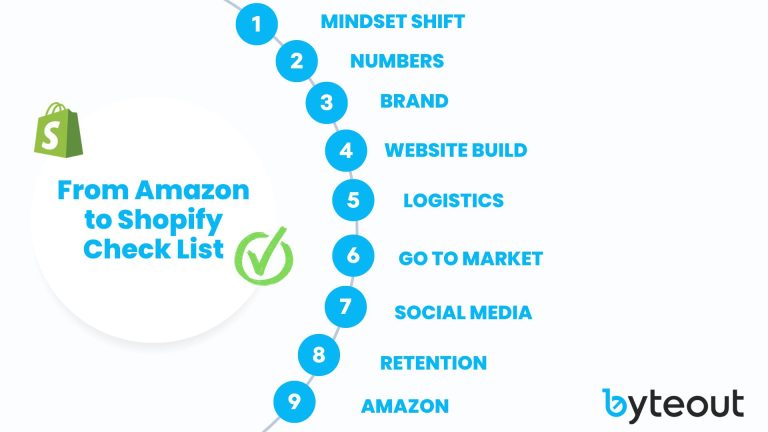
What it means for your brand: if you sell on Amazon, treat it as the place customers discover you and your own online store as the place they come back to. That second purchase is where margin and customer data live. Here is how to run Amazon and Shopify together.
How to analyze consumer behaviour on your own site
Industry trends tell you what to look for. Your own data tells you what to improve first, and it shows the real impact and value of every change.
- Funnel analytics: find the step where most visitors drop off, whether it is the product page, the cart, or a checkout field.
- Heatmaps and session recordings: watch real visitors struggle with a layout, a size chart, or a mobile menu.
- On-site search terms: see what people want and can’t find.
- Post-purchase surveys: ask buyers what almost stopped them, and track customer satisfaction over time.
- Review mining: recurring questions and complaints in customer feedback are your product page copy brief.
- Repeat purchase rate by cohort: the clearest measure of whether customers trust you enough to come back.
Related reading:
- ChatGPT Lost the AI Shopping War. Here’s the One File That Decides If Google Shows Your Store.
- What Your Amazon Listing Can’t Teach You About Shopify
- The Brand Moat for Amazon Sellers in the Agentic Era
- Amazon to Shopify Migration: The Mistakes Redditors Warn About
- Why Amazon Sellers Struggle with Branding
Frequently asked questions
What is consumer behaviour in online shopping?
Consumer behaviour in online shopping is how people find, evaluate, buy, use, and return products online, and the factors that drive those decisions, such as price, trust, reviews, delivery speed, and convenience.
What factors influence online buying behaviour the most?
Total cost, trust, reviews, delivery speed, and return terms have the biggest influence. Baymard’s research shows extra costs are the top reason people abandon carts, followed by slow delivery and lack of trust in the website.
How is AI changing online shopping behaviour?
Consumers increasingly use AI assistants to research products, get recommendations, and find deals before visiting a website. Adobe reported a 693.4% increase in traffic from generative AI tools to US retail websites during the 2025 holiday season compared with 2024, and more than 300 million Amazon customers used Rufus in 2025.
How does social media influence online shopping?
Social media is often where consumers first discover a product, through creators, friends, and ads. In-app shopping on platforms like TikTok Shop and Instagram shortens the path from discovery to purchase, and user-generated content shapes what people expect before they reach a brand’s website.
Why do online shoppers abandon their carts?
The most common reasons are unexpected extra costs (40%), slow delivery (20%), distrust of the website with card details (19%), forced account creation (18%), and a long or complicated checkout (17%), according to Baymard Institute. The average abandonment rate is about 70%.
Do consumers prefer shopping on Amazon or on brand websites?
Most use both for different reasons. Marketplaces win on convenience and fast delivery, especially for first purchases. Brand websites win repeat customers when they offer subscriptions, bundles, loyalty rewards, exclusive products, or a better experience.
How can a small e-commerce brand use consumer behaviour insights?
Start with your biggest drop-off point. Use funnel analytics and session recordings to find it, then fix the matching behaviour: show total costs early, add reviews, display delivery dates, simplify checkout, and make returns easy.
The bottom line
Online consumers today are informed, mobile, and impatient, with more choices than ever, and they now arrive with an AI assistant’s opinion already formed. The brands that win remove doubt at every step: clear information, honest reviews, no hidden fees, quick delivery, and easy returns.
If you sell on Amazon and want an online store built around how people actually shop, see how we build Shopify stores for Amazon sellers, book a free consultation, or contact us.
Free course
Amazon to Shopify, step by step
Five short video lessons for Amazon sellers building their own store. Free, no call needed.
Watch the free course