The #1 mistake brands make after a customer buys
Table of Contents
The #1 mistake brands make is the main topic in an interview between Dušan Popović, CEO of Byteout Software, and Mariah Parsons, Head of Marketing at Malomo and a leading expert in post-purchase experience.
The big question: What actually happens after a customer clicks the “Buy” button? For most brands, the relationship goes dark, or worse, it’s handed over to a generic carrier tracking page. Mariah, having worked with hundreds of merchants over the last five years, explains why the post-purchase phase is actually the most profitable time to engage your customers.
If you are tired of losing customers to buyer’s remorse or overwhelmed by customer support tickets asking Where is my order?, this strategy is for you. Let’s break down chapters of the interview
Introduction to post-purchase strategies
In the world of e-commerce, most of the budget is spent on the pre-purchase phase: Facebook ads, Google PPC and SEO to get a customer to the checkout. However, the real growth for a DTC brand happens after the transaction is complete.
As Dušan and Mariah discussed, the post-purchase experience is the period between the customer clicking “Buy” and the physical product arriving at their doorstep. This is often referred to as the “Waiting Gap.”
Why post-purchase is the new growth frontier
For years, brands treated shipping as a purely logistical cost. But today, top-performing Shopify stores view it as a high-intent marketing channel.
“People are starting to realize that after the customer clicks the buy button, that is when the relationship actually starts,” says Mariah.
By reclaiming the tracking experience from carriers like FedEx or UPS and bringing it back to a branded environment, you aren’t just giving an update: you are building trust. This strategy focuses on three main pillars:
- Retention: Reducing buyer’s remorse by staying present.
- Revenue: Using the tracking page to suggest complementary products.
- Efficiency: Reducing the burden on customer support by being proactive about shipping updates.
When you treat the post-purchase journey as a strategy rather than an afterthought, you stop fighting for one-time transactions and start building a brand that customers return to 4.6 times per order: the average number of times a customer checks their tracking status.
Common mistakes in post-purchase experience
Many brands believe their job is done once the fulfillment team labels the box. However, according to Mariah, this is where the most expensive mistakes happen.
The #1 mistake brands make is going silent. When a brand stops communicating, the customer enters a black hole of uncertainty.
Why sending customers to carrier sites is a growth killer
Most Shopify stores use the default setting that sends customers to a UPS, FedEx, or DHL tracking page. This is a massive missed opportunity for several reasons:
- The disconnect: You lose control over the brand’s aesthetic and voice.
- Wasted attention: Customers check their tracking status an average of 4.6 times per order. If you send them away, you are giving that high-intent traffic to the carrier for free.
- Buyer’s remorse: Without reassurance, customers start questioning their purchase: “Did I get the right thing?” or “Did I choose the right brand?”
By leaving this space blank or generic, you aren’t just missing a sale, you are potentially increasing your return rate because the customer hasn’t been properly onboarded to the product they just bought.
Effective post purchase flows: emails & automations
To fix the black hole of silence, Mariah recommends a two-pronged approach to post-purchase flows: standard flows and exception flows.
The traditional happy path flow
These are the transactional emails everyone expects. While Shopify provides these out-of-the-box, the most successful brands customize them to maintain their brand personality.
The power of exception flows
This is where the real strategy kicks in. Exception flows are automated emails triggered when something goes wrong, like a delay or a package lost in transit.
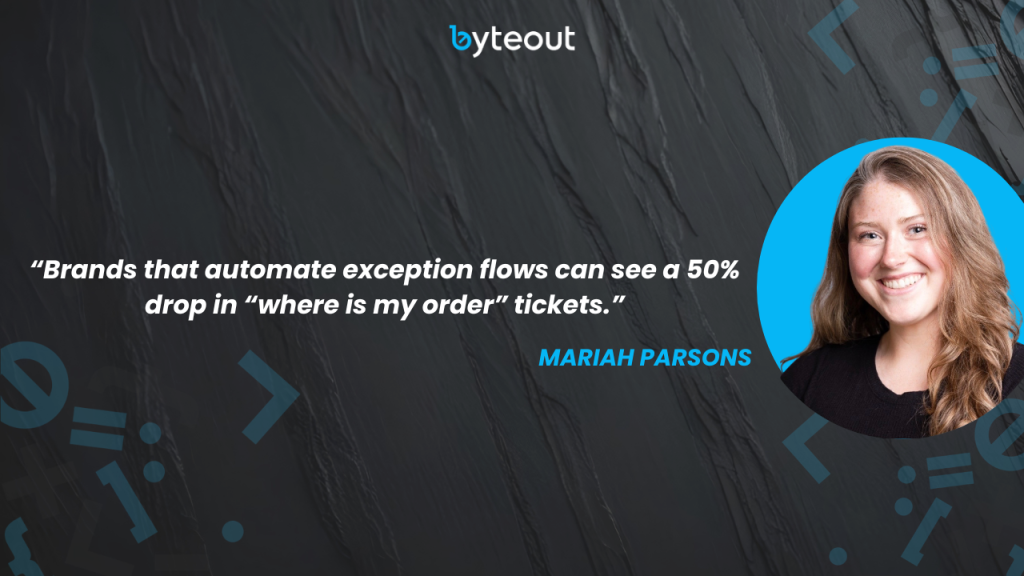
“If a customer’s order is delayed and they haven’t heard from the brand, they get frustrated and hit up the support team,” says Mariah. “Brands that automate exception flows can see a 50% drop in WISMO (Where is my order) tickets.”
Enhancing engagement with order tracking
The order tracking page is the most visited piece of real estate in your entire digital ecosystem.
While a standard marketing email might get a 20% open rate, customers check their tracking status an average of 4.6 times per order. This is a high-intent window where the customer is 100% focused on your brand. By reclaiming this page from third party carriersand hosting it on your own branded domain, you keep that attention where it belongs: on your website.
Instead of a cold, transactional data table, a branded tracking page allows you to continue the storytelling that started at the checkout. This reduces “buyer’s remorse” and bridges the gap between payment and delivery. When customers stay in your branded environment, you reduce the fractured experience of traditional e-commerce, ensuring that the excitement of the purchase remains high throughout the entire fulfillment journey.
Top features for order tracking success
To turn a tracking page into a revenue driver, Mariah suggests three high-impact features. First is dynamic product recommendations. For brands with multiple SKUs, placing personalized cross-sells below the fold can significantly lift AOV. Malomo’s data shows that for brands with an AOV over $200, a well-optimized tracking page can add an average of $3.60 in extra revenue per order just from repeat purchases made while waiting for the first box.
Second, for high-ticket items where an immediate second purchase is unlikely, focus on Loyalty and SMS sign-ups. Use the tracking page to invite customers into your VIP circle or offer exclusive perks for joining your SMS list. Finally, incorporate Educational Content. Whether it’s a “how-to” video or a product care guide, educating the customer before the product arrives drastically reduces return rates and support tickets, ensuring they get the best possible experience from day one.
Creative strategies for upselling and engagement
One of the most innovative tactics discussed by Dušan and Mariah is the double shipping hack. If your fulfillment process has a longer lead time, you can offer customers the chance to add items to their existing order before it leaves the warehouse. By highlighting that they can save on additional shipping fees by bundling late additions, you provide genuine value while increasing your bottom line. It’s a powerful way to monetize the idle time in your logistics chain.
Furthermore, you can use urgency and social proof to drive engagement. Adding a countdown timer for a pre-shipment discount or displaying UGC of other customers unboxing their orders creates a sense of community and excitement. Some brands even integrate live tracking icons directly into their marketing emails, blurring the line between transactional updates and promotional content to keep engagement rates at an all-time high.
Final Thoughts
The post-purchase journey is no longer just about moving boxes, it’s about moving the needle on customer loyalty. As Mariah Parsons highlighted, the brands that win in 2026 are those that treat the “waiting gap” as a strategic opportunity rather than a logistical chore. By reclaiming your data and your customer’s attention, you transform a cost center into a profit-generating machine.
Watch the full interview
This blog only scratches the surface of the deep dive conversation between Dušan Popović and Mariah Parsons. If you want to see the specific design mockups, hear more case studies, and learn how to drop your support tickets by 50%, you don’t want to miss the full video.
If you’re ready to move beyond basic e-commerce and build a Shopify experience that scales, let’s talk, our team offers free consultations to help you optimize or build your store from the ground up.


Your Amazon store needs a partner
We build and grow your Shopify DTC business together with Amazon.
Find out how to own your audience and not depend only on Amazon high fees.

Author: Dusan Popovic

From Amazon to Shopify Check list

Best Amazon FBA course 2026

Connect Shopify to Amazon: Complete 2026 guide